The Longford Academy offers two main courses each year:
Summer School in Building Conservation: 7 days, held in early-mid February.
Autumn: Introduction to Practical Building Conservation: 6 days, held in early May.
Outlines of these courses are provided below. In some years we run additional courses on special topics.
In 2027 we will be running a special 5-day course on Lime in Building Conservation that is limited to people working in Tasmania. Details below.
15–21 February 2027 (7 days)
14–20 February 2028 (7 days)
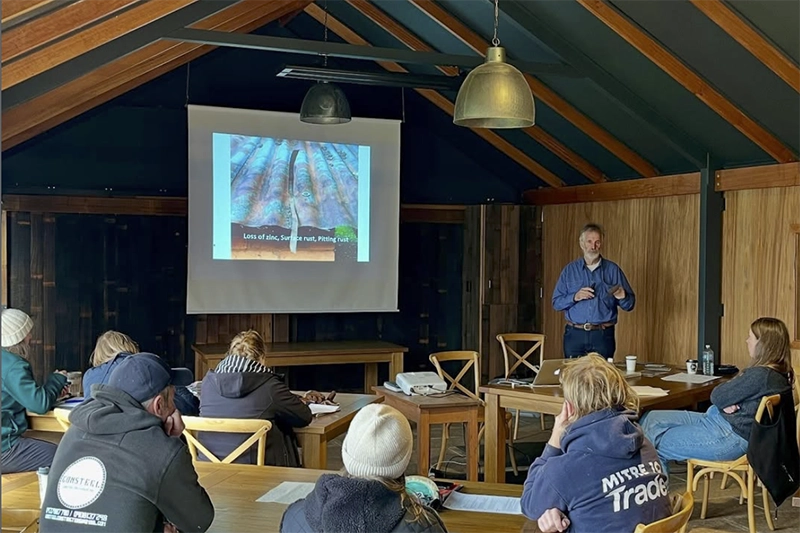
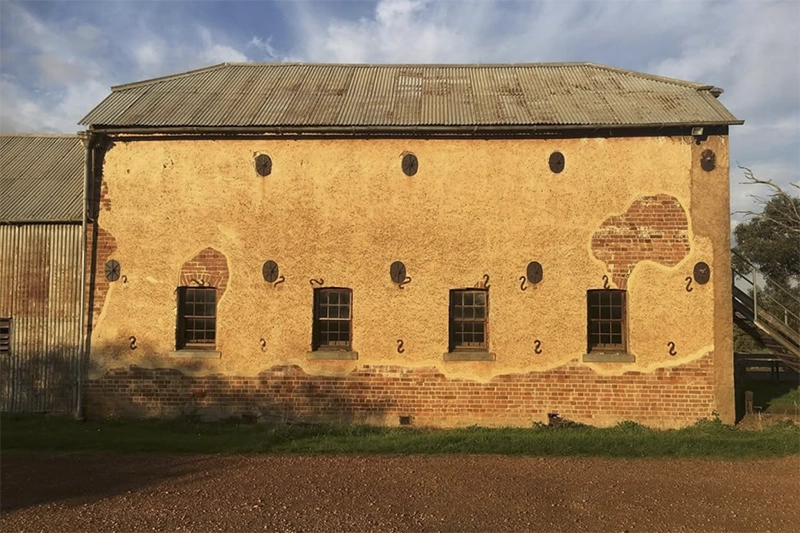
The Summer School is an intensive seven-day course on the conservation of traditional buildings. It focuses on the properties, deterioration and conservation of stone, brick, mortar, plaster, wood, metals and paints. Topics covered include rising damp, salt attack, lime mortars and plasters, timber decay and joinery repairs, the repair and reconstruction of corrugated iron roofs, and the investigation of early paint finishes. Theory sessions are supported by inspections on the Brickendon and Woolmers Estates.
The Summer School provides the theoretical basis for building conservation practice that is complemented by the Autumn program which places more emphasis on practical aspects.
The Summer School is intended for all those involved in the care and physical management of buildings, including architects, engineers, planners, site managers, conservators, heritage officers and others who specify or oversee works to heritage buildings, as well as tradespeople and builders who want to extend their understanding of materials and heritage issues.
10-15 May 2027 (6 days)
8-13 May 2028 (6 days)
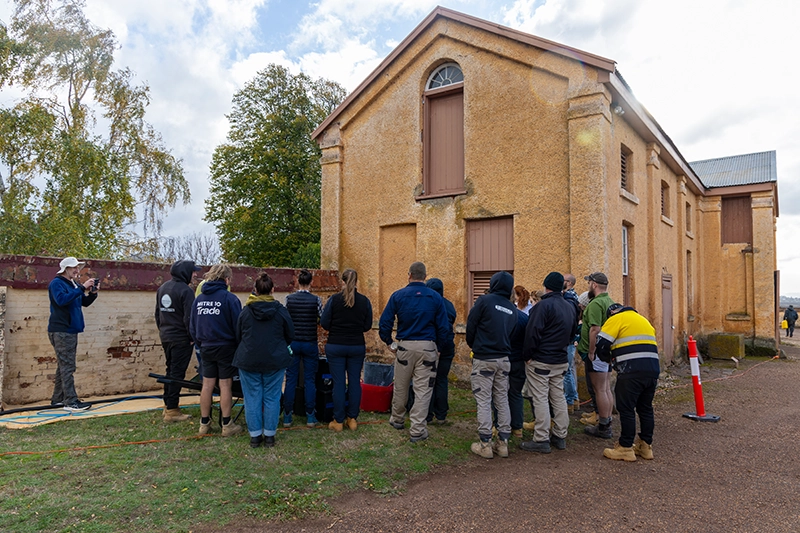
This six-day course introduces participants to the practical aspects of building conservation. Topics covered include paint stripping, dealing with damp and extracting salts, lime-based materials (mortars, plasters and limewashes), diagnosing timber decay and repair needs, roofing and metals. Site inspections and practical activities are reinforced by theory sessions and discussions.
The Autumn course is for all those involved in building conservation (whether specifiers or those who are on the tools) who want some practical and theoretical exposure to a range of topics that they’re likely to come across in their normal work. More relaxed than the intensive Summer School, the Autumn course provides a good hands-on introduction to anyone looking after older buildings.
Course fees are charged to cover program development and delivery costs, lunches and morning and afternoon teas. Travel and accommodation costs are not included. As a guide to future costs, the 2026 Summer School cost $3,000 and the Autumn course cost $1,700.
17-21 May 2027 (5 days)